

Short Look
Background
MISSION ARMENIA NGO

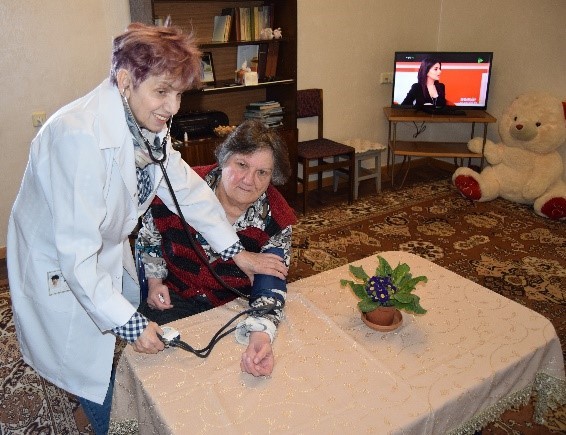
In the hardest times for Armenia, Mission Armenia Charitable Non-Governmental Organization created, implemented and developed a comprehensive system for providing community-based social-healthcare services, which up to now have no parallels in either state or public sectors. This system enabled the elderly, the disabled, refugees, temporary asylum holders, persons in a refugee-like situation, stateless persons and other vulnerable groups to access a variety of social and healthcare services in their homes and communities according to their personal needs and abilities.
Today, Mission Armenia has founded about 30 infrastructures that provide a comprehensive set of community-based services to over 20,000 beneficiaries in in the Republic of Armenia (RA) and Artsakh.
Having adopted a systematized approach of assisting the vulnerable groups the Organization not only provides services to beneficiaries but also strives to contribute to the overall improvement of social policies and the development of social partnership.
Mission Armenia’s community-based model has found wide recognition not only in Armenia but also in the whole Caucasus region, having been introduced in Georgia, Azerbaijan and Dagestan.
– Founder of International Union of Black Sea NGOs comprised of 50 NGOs from 12 states of the Black Sea region, the secretariat of which is permanently based in Armenia and is headed by the Mission Armenia NGO.
– Founder-member of Armenian Elderly Protection Network, in the frame of which the members support the implementation of programs aimed at protecting the interests of the elderly, improving their quality of life, their unimpeded participation in public life, access to health and social services, aiming to expand cooperation within the framework of social protection.
– Member of HelpAge International: a unique worldwide alliance standing up for the rights of older people. With 158 members and country offices across 86 countries, HelpAge International is the secretariat to a global network of organizations promoting the right of all older people to lead dignified, healthy and secure lives. HelpAge International’s vision is a world in which all older people can lead dignified, healthy and secure lives. The Network’s mission is to promote the wellbeing and inclusion of older women and men, and reduce poverty and discrimination in later life. HelpAge International work with older women and men in low and middle-income countries for better services and policies, and for changes in the behaviours and attitudes of individuals and societies towards old age.
– Member of Global Alliance for the rights of Elderly: was born out of the need to strengthen the rights and voice of older people globally and to promote their rights. As a network of 380 members in around 80 countries worldwide, the mission of the Global Alliance is to support and enhance civil society’s engagement at national, regional and international levels on the need for a new international instrument on the rights of older persons. The Global Alliance for the Rights of Older People seeks a world in which older persons live free from discrimination and are able to fully enjoy their rights. The Alliance’s core values are partnership with, inclusion of, and the promotion of participation by older people in decisions that affect their lives.
– Member of AgeNet International: is performing the following activities: Monitoring of the older generation status; Network members’ capacity building; Development of the strategy for the improvement of the older generation status in intersectoral partnership; Development and implementation of mechanisms of the provision of equal access to the social services; Development of the principles of the Madrid Plan in the countries; Open and use of capacity of older people for realization of goals of the Network.
– Founder/member of different local, regional and international networks dedicated to poverty reduction and social reforms for the elderly, disabled and refugees.

Since 2007 a portion of funding necessary for the realization of Mission Armenia activities has been provided by the Armenian Government’s Medium-Term Expenditures program as well as by local self-governing bodies through cost-sharing agreements.
In 2008 RA Ministry of Labor and Social Affairs granted license to Mission Armenia for social service provision.
In April 2002 the Organization was accredited to the Second World Assembly on Ageing in Madrid, where all the UN member states were gathered to approve International Action Plan on Ageing and Political Declaration with the motto “Society for All Ages”.
In September 2002, in Berlin, at the Ministerial Conference on Ageing held for 55 European Countries, where European Regional Strategy was to be approved, Mission Armenia was unanimously selected as a keynote speaker by the NGOs of the participant countries to present the comments and suggestions made by NGOs on Strategy.
In July 2001, Mission Armenia Australian branch was established. The primary purpose of the branch is to support the work of Mission Armenia in Armenia. For more information about the branch, visit the website https://www.missionarmenia.org.au/.
In January 2021, the Organization established Artsakh support center in Stepanakert. The activities of the center are mainly aimed at registering displaced, socially vulnerable families living in rural areas and villages in , and identifying their basic needs. The branch provides humanitarian, social, psychological and legal assistance.
– To ensure conditions necessary for vulnerable people to live an independent and fulfilling life without segregating them from their familiar environment and communities;
– To address their multifaceted social and health needs through community-based services (health, care, food, social assistance, consulting, household repair etc);
– Promote the formation and operations of self-help groups among the elderly/vulnerable and initiate public awareness and advocacy campaigns;


– Ensure different income-gaining opportunities for them and provide the means for competitive participation in the current conditions of market economy (vocational training, consulting, interest-free micro loans, temporary employment opportunities, etc);
– Lobby for national strategies and legislative frameworks to tackle core issues of poverty;
– Always consider the preferences of the beneficiaries regarding the provision of services and prioritize those activities that are considered most important and beneficial for them.